
Why “What Doesn’t Kill You Makes You Stronger” Maybe Psychologically Wrong
Resilience isn’t automatic. Sometimes what doesn’t kill you just leaves scars.

The Comfort of a Lie
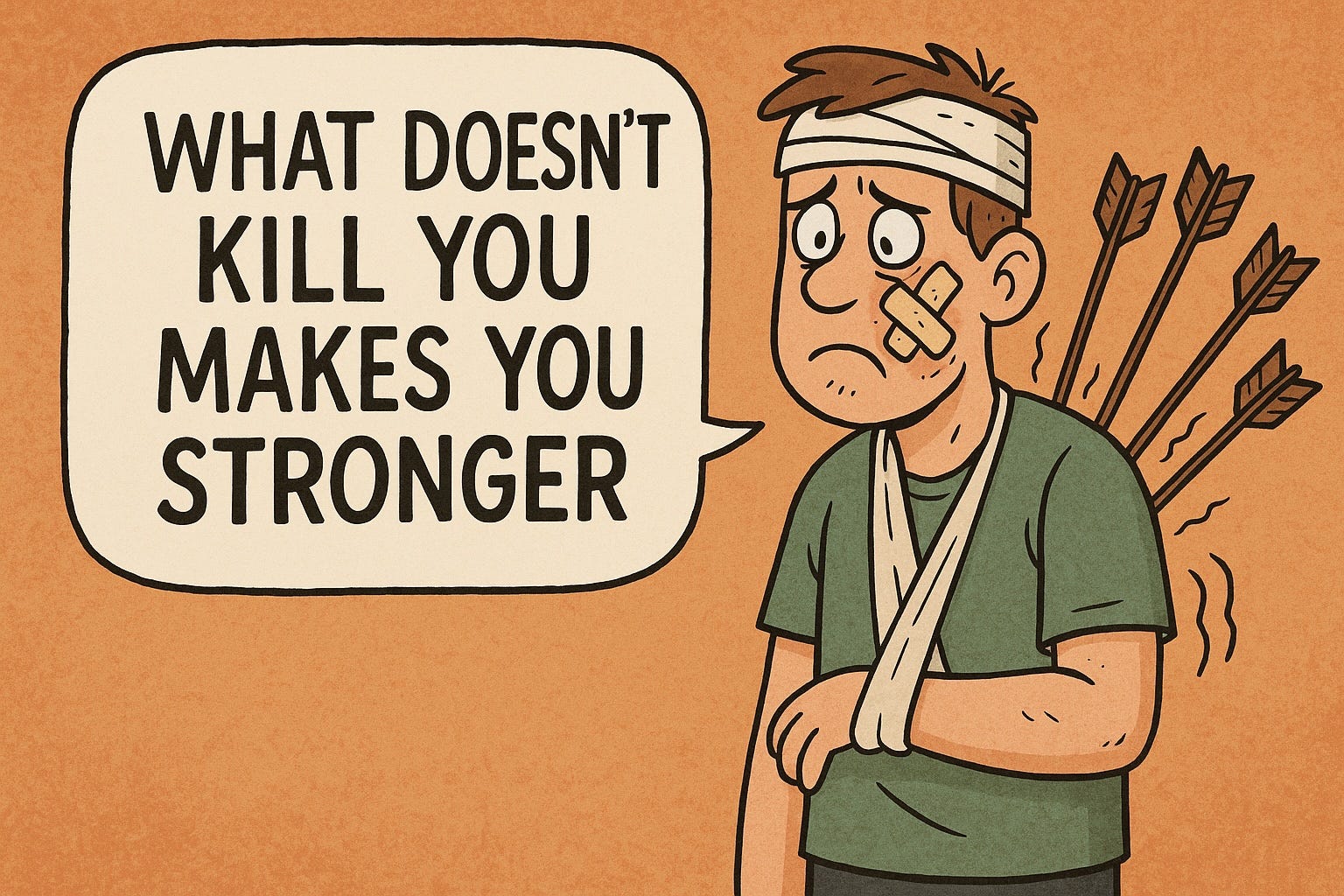
We love simple slogans. They reassure us when life feels chaotic. Few lines are quoted as often as Nietzsche’s “What doesn’t kill you makes you stronger.” It’s repeated at graduations, scrawled on gym walls, and dropped into motivational speeches.
However, here’s the problem: psychology and lived experience suggest that it isn’t true. Surviving something hard doesn’t automatically forge strength. Sometimes it makes us weaker, fearful, or permanently scarred. Believing the opposite can trap us in denial, toxic positivity, and bad decisions.
Why We Believe It
There’s a reason the phrase sticks. It plugs into three powerful psychological needs:
Control – We want to believe pain has purpose, that suffering produces a guaranteed payoff.
Hope – It reframes trauma as opportunity, promising growth without effort.
Social Comparison – Survivors who “bounce back” are celebrated. We view them as evidence that toughness is a universal trait.
This is textbook survivorship bias — we hear from the people who say their struggles made them stronger, not from the ones still quietly wrecked by them.
The Reality: What Trauma Really Does
Psychological research paints a more complicated picture:
Post-Traumatic Stress Disorder (PTSD) – For many, near-death events, violence, or significant losses create lasting hypervigilance, nightmares, and avoidance behaviors. That isn’t strength — it’s suffering.
Cognitive Distortions – Trauma can entrench fear-based thinking: “If it happened once, it will happen again.”
Physical Cost – Chronic stress can reshape the body, leading to immune suppression, increased cardiovascular risk, and even a shortened lifespan.
Yes, some people emerge with Post-Traumatic Growth (PTG) — more profound empathy, greater resilience, sharper perspective. But growth doesn’t appear automatically. It comes only through processing, reflection, and deliberate healing.
The Problem with the Saying
The danger of “what doesn’t kill you makes you stronger” isn’t just that it’s false — it’s harmful.
It Silences Struggle – People feel ashamed if they don’t feel stronger. They hide pain instead of seeking help.
It Excuses Abuse – In toxic workplaces or relationships, suffering gets reframed as “character-building.” In reality, it’s exploitation.
It Promotes Magical Thinking – Instead of building skills or support networks, we wait for strength to appear from hardship magically.
This is where toxic positivity creeps in: denying reality in favor of a shiny slogan.
A Better Way to Think About Strength
Resilience isn’t a gift from hardship. It’s built. It requires work, support, and intentional practice.
Psychologists often frame resilience around three pillars:
Processing the Experience – Reflection, therapy, or simply acknowledging pain instead of suppressing it.
Support Systems – Family, friends, colleagues, or professionals who help reframe and share the burden.
Purposeful Action – Choosing to integrate lessons into new habits, boundaries, or goals.
In short, what doesn’t kill you leaves you with raw material. It’s what you do with it that determines whether you grow or carry scars.
Examples in Everyday Life
Workplace Burnout – Some professionals hit burnout and say it “toughened them up.” More often, it makes them cynical and less engaged unless they actively reset boundaries and expectations.
Personal Loss – Losing a loved one rarely makes you stronger immediately. It often breaks routines, undermines identity, and takes years of active grieving before new strength emerges.
Physical Training – Even in the gym, the slogan misleads. Intense strain doesn’t always make you stronger; it can injure you if you don’t balance stress with recovery.
Conclusion: Don’t Settle for a Catchphrase
Nietzsche gave us a catchy line, not a psychological truth. Sometimes what doesn’t kill you makes you anxious. Sometimes it makes you bitter. Sometimes it just leaves you exhausted.
Strength doesn’t come from the trauma itself. It comes from the choices you make afterward — whether you seek help, reflect, and rebuild.
So maybe the better motto is: “What doesn’t kill you gives you work to do. Growth comes from how you do it.”